

7 out of 10 customers who add products to their cart never complete the purchase. Does it sound like a problem your e‑commerce faces? In the article, we’ll explain the cart abandonment phenomenon, its reasons and ways to recover.
What is Cart Abandonment in E‑commerce?
Cart abandonment occurs when a customer adds items to their online shopping cart but leaves the website before completing the purchase. The products sit in the cart, the customer never returns, and the sale is lost. In e-commerce, this isn’t just an unfinished action – it’s a direct hit to your revenue. With nearly 70% of carts abandoned on average, understanding this behavior is the first step toward recovering what’s rightfully yours.
Why is Shopping Cart Abandonment a Problem for Retailers?
To put it simply, it is a loss in sales. Here’s the hard truth: no matter how big your e-commerce is, the 70% e-commerce cart abandonment applies to everyone. This number is even higher for mobile devices users and reaches approximately 85%. Let’s dig deeper into the potential consequences for your business.
- Loss in Revenue
It is obvious that if a person doesn’t finalize the purchase, you don’t earn money and even lose revenue. Forrester research shows that e-commerce stores lose $18 billion yearly due to shopping cart abandonment and this number can significantly rise in upcoming years.
- Low Return of Sales (ROS)
You invest in marketing strategy and actions, SEO, social media ads, which cost you per click. But this results in 7 out of 10 basket abandonment. That’s marketing spend with nothing to show for it.
Read this article if you want to know more about ROS and how to calculate it.
- Building Brand Image
It’s not a secret that brand image and reputation are very important in e-commerce business. But what are online shopping cart abandonment effects on your business? The answer is simple – missed opportunities.
The first one is building loyalty with buyers: no transaction → not a customer → no repurchasing → no loyalty.
The second missed opportunity is reviews – one of the most important sales drivers in online shopping. The person who abandoned their cart cannot leave a review, and others may choose your competitor solely based on more reviews or higher ratings. Or without feedback – even the negative one – you won’t be able to understand if your store needs some improvements and in which area.
Top Checkout Abandonment Reasons
We discussed why cart abandonment is a problem for e-commerce entrepreneurs, but what are the reasons for the phenomenon?
“I was just browsing” or “I am not ready to buy” was the most frequent answer (43%) of respondents in the survey conducted by Baymard Institute (note: this data regards the survey held among US respondents). You can’t do much with these window shoppers, so save your energy and resources for the one you can do the change.
Extra Costs
The second largest reason for digital shopping cart abandonment and totals 39%. It includes premium shipping costs, insurance, or wrapping. These are visible and transparent, and customers have control over them or a choice to use or not. Hidden costs – such as service fees, customs, return fees, or shipping costs not shown upfront – are usually unexpected or forgotten by a customer, so it leads to a dropped shopping cart.
Therefore, your task here is to be as transparent as possible, and show all possible costs from the very beginning. It will minimize the risk of abandoned cart and customer loss.
Delivery Time
With a fast-paced world, customers need their purchase right away or at least the next day. So, the delivery time that takes days or weeks is an understandable reason for online cart abandonment. Your responsibility is clear, try to offer the most convenient ways of delivery for your customers – it includes delivery time, method of picking up, and trustworthiness of delivery service.
Store Trustworthiness & Simplicity of Purchase Process
Complex purchasing process and the lack of trust towards e-store to share payment card information were declared next important checkout abandonment reasons. If you sell solely on marketplaces or e-commerce platforms, you may not need to worry about customers’ concerns over sharing card information by customers since it’s the marketplace’s task to build this trust among clients. Also, the purchasing process is also by marketplace’s side.
However, these issues become real once you have your own online store. The trust issue can lie in the visual aspect of your website as well as at a checkout process, when you are missing trust badges (Visa, Mastercard, Paypal, etc.), redirect to suspicious looking URLs, or have too many steps or fields to fill in.
It is also related to a complicated buying process, including forcing customers to sign up to finalize the purchase. As an example, Amazon’s profit reached $300 million in 2008-2009 for the first time after they implemented one simple solution “Continue to proceed the purchase without creating an account”. Sounds too easy? But it can be a real game changer in decreasing shopping cart abandonment rate.
Return Policy
A complicated return process or lack of transparency – 15% of shoppers say it’s the reason for not finalizing the purchase.
Buying online can be risky – even if measurements were made carefully and it’s the color a customer likes, but in the end it is not the same as they expected, it doesn’t fit as it should. Naturally, they would love to return the product. So, before buying anything a client is likely to check the return policy. If they find it not clear enough or hidden somewhere, they are likely to leave your store without purchasing. Thus, make sure to give easy access to the return policy and be honest with it.
Payment Method
Every country has its own preferable payment method. If a client cannot find their favourite or second favourite method of payment, they are likely (10%) to abandon the cart. This signals the need to offer multiple payment methods, especially the most popular ones among the population.
For example, in the USA it is advised to have PayPal or Venmo that allow customers to checkout fast and securely. While in the UK digital wallets – Apple Pay or Google Pay – increased their popularity due to convenience. Sometimes, some countries have their own unique method – like BLIK in Poland – which is a totally must-have for e-commerce.
How to Calculate Your E-commerce Cart Abandonment Rate
Now, you know shopping cart abandonment reasons, but you might be wondering how to calculate cart abandonment rate in your e-commerce? It is an easy formula. But first, you need to know the Cart Conversion Rate. To do so, you should apply the following formula:
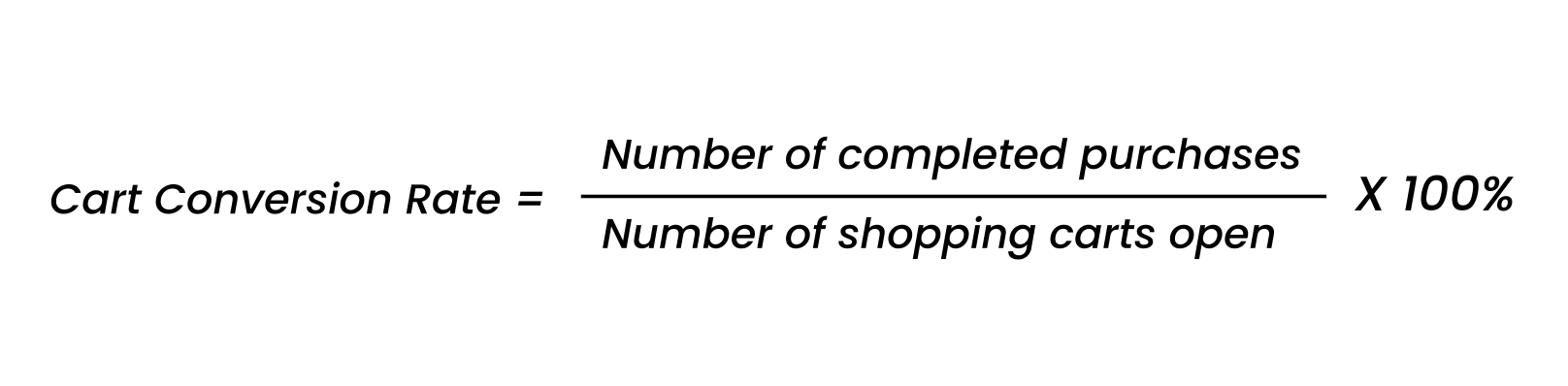
So, for example, if the number of completed purchases is 100, and number of shopping carts open = 400, then Cart Conversion Rate is as follows:

So your Cart Conversion Rate totals 25%. Knowing it, now you can calculate your e-commerce Cart Abandonment Rate by using the following formula:

So, using the data we got before, it goes as follows:

So, the total is 75%.
The process is even faster if you use Ecommerce tracking in Google Analytics, because the system does the work for you. You just need to open Conversion → Ecommerce → Shopping Behavior.
The Real Effects of Shopping Cart Abandonment
Earlier, we discussed what problems an e-commerce seller can face due to cart abandonment – such as revenue loss or low ROS. But what are other effects of shopping cart abandonment?
- Product unavailability. Many systems reserve items added to carts, so other customers who are ready to buy may see the product as out of stock – a missed opportunity.
- Inaccurate analytics data. With many abandoned carts or window shoppers, the data about real customers can be distorted. Therefore, future marketing or pricing decisions can be misguided.
- Decreased ROI. You spent money on advertising, as well as on the re-marketing of a customer, who didn’t plan to buy anything in the first place or in the process abandoned a cart.
Effective Shopping Cart Recovery Methods
You calculated your e-commerce shopping cart abandonment rate, and discovered it’s higher than you’d like. What to do in such a situation?
- Visual appeal and UX/UI adaptation. Analyze your website, offers on marketplaces, and an app from the visual side. Is it accessible? Is it easy to navigate? Is there enough information without being overwhelming? All these factors are important. Users prefer stores with the fastest purchase process and that are visually appealing.
- Optimization for mobile. Since customers mostly use their mobile devices to make purchases, it is a must to have your website and checkout process fully optimized to phones.
- Checkout option. Do not make a customer create an account just for one purchase. There’s a higher probability that this customer will not finalize the purchase. But allowing customers to purchase “as a guest” increases your chances of finding your loyal customers who will come back to you.
- Payment methods. If you sell internationally, do the research beforehand which payment methods are the most popular in that country. Be flexible and give customers different options, so they find what is convenient for them.
- Delivery methods. Again, offer diverse delivery options for clients. Choose the shipping companies you work with wisely – the ones who are trusted by customers.
- Transparency. It relates to both all fees and return policies. Make it visible, transparent, and easy to understand. That builds trust in customers from the beginning, thus, minimizing the risk of cart abandonment.

- Shopping cart recovery campaign. A customer added a product in a cart and left it? They may have been interrupted by other tasks. So, 2–3 personalized emails or website messages can remind them about finalizing the purchase. Remember to provide a direct link to finalize the purchase. You may also consider giving them a special discount.

A high cart abandonment rate signals room for improvement but also opportunity. By optimizing UX, mobile checkout, payments, and delivery, you reduce friction and build trust. Tools like live chat offer real-time support when it matters most, while targeted recovery campaigns bring customers back. Small tweaks can turn hesitation into conversion.
FAQ
What is shopping cart abandonment?
Cart abandonment occurs when a customer adds items to their online shopping cart but leaves the site before completing the purchase. This can happen at any stage of the checkout process, from the moment an item is added to the cart, right up to the final step before payment is confirmed.
What is the average shopping cart abandonment rate?
The average shopping cart abandonment rate is approximately 70% for desktop users. For mobile device users – it’s 85%.
How to solve shopping cart abandonment?
To solve cart abandonment, you should focus on:
- UX/UI optimization of your website/app. Optimize both desktop and mobile versions. Additionally, the whole checkout process should be perfectly optimized for mobiles since it’s the most popular way to shop.
- Delivery & payment methods. Give your customers a choice for delivery companies and payment methods. Work with the most popular services providers in the region.
- Return Policy. Make it simple and easy to access. Many customers may abandon their carts due to complicated or not clear Return Policy.
- Live chats or chatbots & Recovery campaign. Live chat or chatbots help eliminate last-minute hesitation by answering customer’s questions real time. While recovery e-mail or popup campaign reminds customers to finalize their purchases.
Does cart abandonment hurt business?
It does. It hurts revenue, marketing ROI, and your ability to build customer loyalty and gather reviews.
What is the difference between cart abandonment rate and checkout abandonment rate?
Both metrics measure the percentage of customers leaving their purchase unfinalized. However, the checkout abandonment rate is just one part of the cart abandonment rate. The main difference is:
- Checkout abandonment rate occurs when the checkout process was started but was never finalized.
- Cart abandonment rate represents the percentage of all abandoned carts happening at any stage of the purchase process.
What are shopping cart abandonment effects?
The main effect that may occur due to cart abandonment are:
- Revenue loss
- Low ROS and ROI rates
- Inadequate analytics and data
- Unavailability of a product for more serious customers.
What is the cart abandonment rate?
Cart abandonment rate is a metric that shows what percentage of shoppers added a product from your store into a cart but never finished the purchase.
What is an abandoned cart?
An abandoned cart refers to the process when a customer has added a product to the cart but never finalized the checkout. It can happen at any stage of the purchasing process, so these customers may remain anonymous, or you may have their data and can potentially convert them.
Why is shopping cart abandonment a problem?
This phenomenon is a problem, first, because of lost revenue – with 7 out of 10 customers not completing purchases, you’re missing out on 70% of potential sales. Moreover, if you spend money on marketing and ads – PPC or remarketing – you pay for clicks that never convert since the purchase wasn’t completed.
Also, if a customer who really wants to buy a product appears, they may not be able to buy it because it’s reserved for someone who hasn’t completed their purchase.


